Erminia Passannanti
Prof.ssa Dr. Erminia Passannanti
Erminia Passannanti is an Italian literary scholar, poet, essayist, literary translator and author. She holds two PhDs from British universities: a PhD in Italian Literature from University College London and a second PhD from Brunel University London in Social Sciences, Law and Media Communication. Her academic and literary work extends across Italian and British literature, twentieth-century poetry, literary theory, semiotics, translation studies, cinema, censorship, cultural history, and Renaissance and Elizabethan literature.
Passannanti's first doctoral research at University College London was devoted to Franco Fortini, with particular attention to the relations among poetry, essay writing, translation, literary language, semiotics and political thought. Her Fortini scholarship includes studies of Paesaggio con serpente, linguistic expressionism, poetic translation and the ideological dimensions of literary form. Her work on Fortini has appeared in scholarly and literary venues and has been reviewed in Annali d'Italianistica and other critical publications.
Her second doctoral research, at Brunel University London, examined Italian cinema and religious censorship, with particular emphasis on the relationship between ecclesiastical power, state censorship, legislation, ideology and cinematic representation. Her subsequent scholarship on Pier Paolo Pasolini addresses the body, religion, censorship, sexuality, political power and the representation of transgression in films including La ricotta, Il Vangelo secondo Matteo, Teorema and Salò o le 120 giornate di Sodoma. Her research has been published in scholarly volumes and institutional cultural archives, including work associated with the Centro Studi Pier Paolo Pasolini.
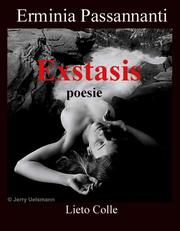
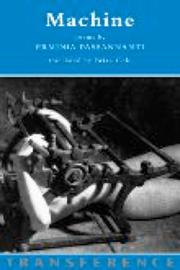
Alongside her academic research, Passannanti has published an extensive body of poetry. Her collections include Noi Altri, Macchina, Extasis, Mistici, La realtà, Il Roveto and Il torsolo del ventre e altre fandonie. Her poetry has appeared in numerous Italian and international anthologies and has received literary recognition, including the Premio Laura Nobile. Her poetry has been the subject of critical essays and reviews by literary critics including Francesco Muzzioli, Gianmario Lucini, Ambra Zorat and Daniela Raimondi.
Passannanti is also a literary translator and editor working between Italian and English. Her translations and editorial projects include poetry by British and Irish writers, among them the Brontë sisters, T. S. Eliot, Seamus Heaney, Geoffrey Hill and R. S. Thomas. Her anthology Gli uomini sono una beffa degli angeli: Poesia Britannica Contemporanea was published by Ripostes in 1994, with a preface by the British writer and critic Blake Morrison. Her work as a translator has also included anthological and critical projects devoted to contemporary British and Irish poetry.
Her more recent scholarship is devoted increasingly to Renaissance and Elizabethan literature and to the Shakespeare Authorship Question. She works within the Oxfordian tradition of authorship studies and argues for the centrality of Edward de Vere, 17th Earl of Oxford, in the investigation of the Shakespeare canon. Her research examines authorship, textual identity, anonymity, aristocratic literary culture, intertextuality, patronage, literary concealment and the Italian cultural matrix of Elizabethan writing. Her studies address works including Venus and Adonis, The Tempest, Titus Andronicus, Troilus and Cressida, and Willobie His Avisa, as well as the historical and literary networks surrounding Edward de Vere and his circle.
Passannanti's scholarship is characterised by an interdisciplinary approach to literary texts as historical and ideological formations. Across her work on Fortini, Pasolini, contemporary poetry and Renaissance literature, recurring concerns include the relationship between language and power, literary form and ideology, authorship and identity, textual transmission, censorship, and the historical production of meaning.
Her books, essays, poems and translations are represented in academic and bibliographical repositories including UCL and Brunel institutional archives, Academia.edu, Google Books, Open Library, and other literary and scholarly databases.
Academic Qualifications
Dott. in Lettere — First Class Honours Degree, Magna cum Laude, Faculty of Letters and Philosophy, Degree in Modern Languages and Literatures, University of Salerno (1988).
Ph.D. in Italian Literature, University College London (2004).
Ph.D. in Social Sciences, Law and Media Communication, Brunel University (2014).
Academic Profile
Erminia Passannanti is an Italian author, published poet, and independent academic researcher specialising in English and Italian literature, poetry, cinema, religious censorship, and cultural anthropology. Her interdisciplinary research combines literary studies and social sciences, exploring cultural, historical, philosophical, and political themes.
She holds two doctoral degrees: a Ph.D. in Italian Literature from University College London (2004) and a Ph.D. in Social Sciences, Law and Media Communication from Brunel University (2014). Her research examines the intersections between politics, ideology, power, and censorship, with particular emphasis on the cinema of Pier Paolo Pasolini. Her studies address major films including La Ricotta, Il Vangelo secondo Matteo, Uccellacci e Uccellini, and Salò o le 120 Giornate di Sodoma, focusing on representations of Christ, religion, social conflict, and the cultural implications of religious censorship in cinema.
From 2000 to 2004, she taught Italian at three colleges of the University of Oxford: St Catherine’s College, Jesus College, and Mansfield College. She also taught Italian Literature as a part-time tutor at St Clare’s College (1997–2004). In 2004, she obtained a tenured position within the Italian Ministry of Education system as Professor of English Literature and Civilization.
Current Academic Position
Professor of English Literature and Civilization
Italian Ministry of Education, Salerno, Italy
Research Interests
Shakespeare authorship studies
Italian literature and translation studies
Poetics and aesthetics
Poetry and literary theory
Cinema, religion, and censorship
Cultural anthropology
Continental philosophy
Selected Publications
Cinema of Pier Paolo Pasolini
Singolo e comunità nel film Uccellacci e uccellini (1966) di Pier Paolo Pasolini (2020)
Sermo Humilis. Come Pasolini parlò alla gente e della gente ne La ricotta, Il Vangelo secondo Matteo e Teorema (2020)
Pasolini interprete di Gesù attraverso il suo alter ego Enrique Irazoqui (2020)
Linguaggi e metalinguaggi ne La ricotta di Pier Paolo Pasolini. Il cibo (2019)
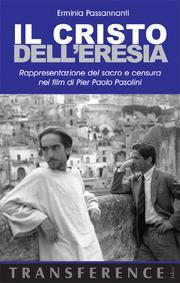
Il Cristo dell’Eresia (2009)
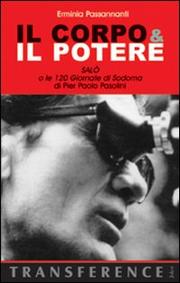
Il corpo e il potere. Salò o le 120 giornate di Sodoma di Pier Paolo Pasolini (2004; 2008)
Literary Theory, Poetry, and Translation
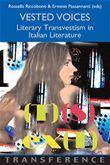
Vested Voices. Literary Transvestism (ed., 2006)
Poem of the Roses: Linguistic Expressionism in the Poetry of Franco Fortini (2004)
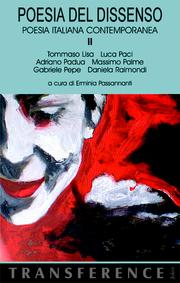
Poesia del dissenso I–II (ed., 2004; 2007)
Senso e semiotica in Paesaggio con Serpente di Franco Fortini (2004; 2011)
Paradosso e realtà della traduzione poetica (2003, Ph.D. thesis)
Gli uomini sono una beffa degli angeli. Antologia di poesia britannica contemporanea (1994)
Emily, Charlotte e Anna Brontë. Poesie (1989)
Other Publications
Leonard Cohen. Poems Inspired by Religion (2024)
Shakespeare Authorship Studies (2024–2025)
Recent research includes studies on authorship, textual identity, and the Shakespeare canon, including:
“Venus and Adonis: A Nobleman’s Signature and the Question of Authorship”
“Rewriting, Concealment, and the Italian Matrix: Edward de Vere and the Shakespearean Canon”
“Who Speaks in the Text? A Comparative Study of Authorship and Authenticity in Shakespeare”
“‘Petrified and Restored’: Hermione between Euripides, Shakespeare, and the Masked Autobiography of Edward de Vere”
“Le biblioteche invisibili: Edward de Vere, Francis Bacon e William Shakespeare a confronto”
“The Lyrical Signature of Edward de Vere: Tragic Sensibility and Aesthetic Kinship with Shakespeare’s Troilus”
“La firma occulta. Titus Andronicus, l’Umanesimo politico e la poetica tragica di Edward de Vere”
“Sacred Texts and Secular Heresies: Shakespeare, Christ, and the Resistance to New Thought”
PUBLICATIONS On Pier Paolo Pasolini:
- Il Corpo & il Potere. Salò o le 120 Giornate di Sodoma di Pier Paolo Pasolini (Troubador, 2004);
*Linguaggi e metalinguaggi ne La ricotta di Pier Paolo Pasolini. IL CIBO. (Brindin Press, UK, 2005).
- La ricotta. Il Sacro Trasgredito, su P.P Pasolini e la censura clericale (2008);
- Il Cristo dell’Eresia. Rappresentazione del sacro e censura nei film di Pier Paolo Pasolini (Joker, 2009);
- La nudità del sacro nei film di Pier Paolo Pasolini (2019).
- Leonard Cohen. A Jewish Mind's Fascination with Jesus of Nazareth.
On Franco Fortini :
- Poem of the Roses. Linguistic Expressionism in the Poetry of Franco Fortini (Troubador, 2005);
*Senso e semiotica in Paesaggio con Serpente (Brindin Press, 2004);
- Scrittura saggistica, dizione lirica e traduzione poetica nell’opera di Franco Fortini (Brindin Press, 2004);
Other books:
Vested Voices. Literary Transvestism (co-edited with Rossella Riccobono), (Troubador, 2006).
Sylvia Plath; Emily, Charlotte e Anne Brontë, Poesie (Ripostes, 1989); Leonard Woolf, A caccia di intellettuali (Ripostes, 1990); Gli Uomini sono una beffa degli angeli: Poesia britannica contemporanea (Ripostes, 1993); R. S. Thomas, Liriche alla svolta di un millennio (Manni, 1998), Poesia del dissenso. Poesia italiana contemporanea (2004-2006), T.S. Eliot, La terra desolata (2015).